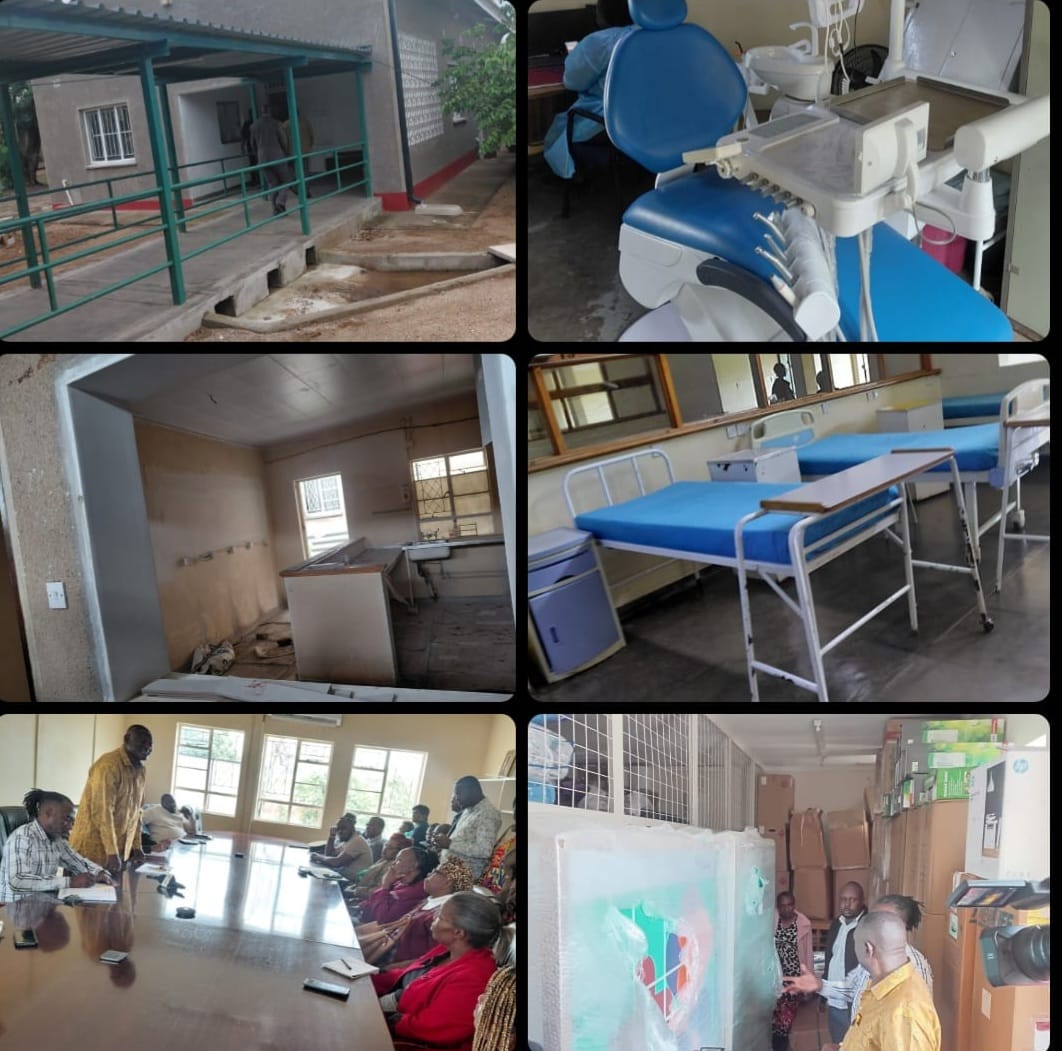
Beitbridge District Hospital has recorded notable progress in healthcare service delivery, highlighted by the acquisition of Zimbabwe’s first automated Anti-Retroviral (ARV) tablets dispensing machine. This milestone was unveiled during a familiarisation tour by the Minister of State for Matabeleland South Provincial Affairs and Devolution, Hon. Albert Nguluvhe.
The visit also provided an opportunity to assess ongoing infrastructural, equipment, and operational challenges affecting the hospital as it transitions from a district hospital into a regional healthcare centre.
1. Installation of Zimbabwe’s First Automated ARV Dispenser
The District Medical Officer, Dr Lenos Samhere, confirmed that Beitbridge District Hospital has taken delivery of an automated ARV tablets dispensing machine, with installation currently pending.
The machine operates similarly to an Automated Teller Machine (ATM), enabling patients to independently collect their prescribed ARV medication. This state-of-the-art system is the first of its kind in Zimbabwe and is expected to:
Reduce congestion at the hospital pharmacy
Improve patient privacy and confidentiality
Streamline access to life-saving HIV medication
Enhance efficiency in ARV distribution
2. Drug Availability at Beitbridge District Hospital
Government officials assured the community that the hospital is adequately stocked with essential medicines. Hon. Nguluvhe encouraged residents to obtain medication directly from the hospital rather than private pharmacies, noting that public facilities offer services at significantly lower costs.
Dr Samhere confirmed that the hospital maintains sufficient drug stocks, with some patients receiving medication covering three to six months.
Senator Tambudzani Mohadi further confirmed that leadership physically verified the availability of drugs during the visit.
3. Infrastructure and Equipment Challenges
Despite progress, the hospital continues to face several critical challenges:
3.1 Ambulance Services
The hospital now has two ambulances, one of which is frequently out of service due to age and high mileage of nearly 700,000 kilometres.
Ambulance services operate under a gazetted fee of USD 2 per kilometre. Sometimes the patient are requested to refuel the ambulance if they cannot afford.
3.2 Sterilisation (Autoclave Machine)
The hospital lacks a functional and modern autoclave machine.
Sterilisation services are outsourced to Gwanda, approximately 200 kilometres away, with an average of three trips per week.
This has placed a significant financial burden on the hospital and has adversely affected surgical services, particularly caesarean section patients.
3.3 Theatre and Emergency Facilities
The hospital theatre is outdated, with a leaking roof, poor drainage, and inadequate ventilation.
Some staff members have reportedly collapsed on duty due to insufficient air circulation, indicating the urgent need for specialised air-conditioning.
The emergency room is too small, accommodating only two patients at a time, which becomes problematic during road traffic accidents involving multiple casualties.
4. Improvements and Achievements
The hospital has recorded several key improvements and service delivery gains, including:
Improved response to road traffic accidents during the festive season
Reduced maternal mortality rates
Availability of a functional dental chair
Laboratory equipment received, with renovations currently underway
A functional X-ray machine, including a mobile X-ray unit
Ultrasound services available free of charge
USD 10,000 allocated for drug procurement
Kitchen equipment currently under procurement
Completion of the pharmacy block, with outstanding needs for shelving and air-conditioning
5. Government Response and Commitments
Hon. Albert Nguluvhe commended the hospital for its cleanliness and general upkeep. He acknowledged the challenges raised and committed to engaging relevant authorities for long-term solutions.
As an immediate intervention, the Minister announced plans to organise a fundraising dinner, in collaboration with local political leadership, to mobilise resources for:
Repairing the leaking theatre roof
Improving ventilation and air-conditioning systems
He further requested detailed quotations to facilitate engagement with potential donors and well-wishers.
Beitbridge District Hospital is transitioning from a district-level facility to a regional healthcare centre, as evidenced by improved drug availability and the introduction of Zimbabwe’s first automated ARV dispenser. However, Hon A Nguluvhe emphasized that infrastructural deficiencies, equipment shortages, and emergency service limitations remain pressing concerns. Continued government support, community engagement, and resource mobilisation are essential to ensure sustainable healthcare delivery for the Beitbridge District community and surrounding regions.