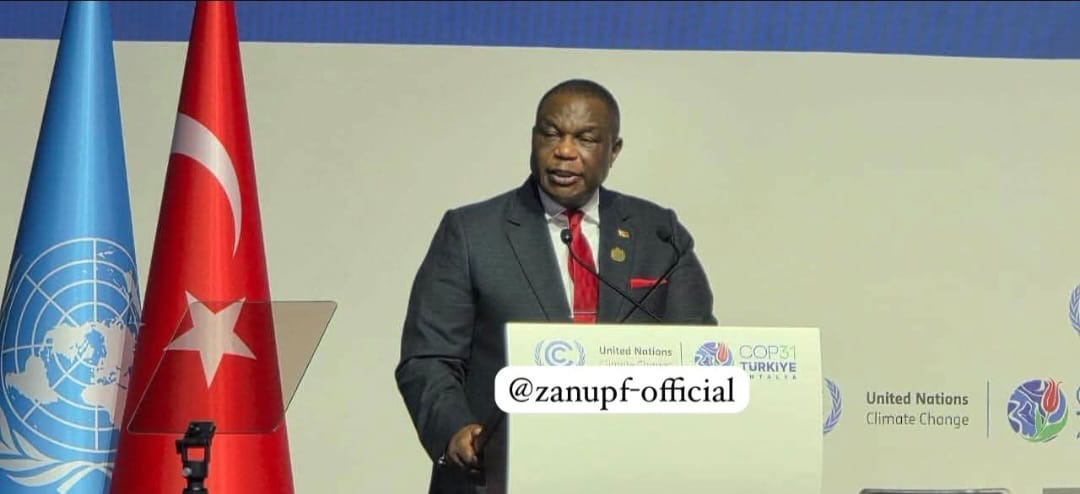
Vice President Dr C.D.G.N Chiwenga, who is leading Zimbabwe’s delegation at COP31 in Türkiye, has challenged wealthier nations to translate their climate finance commitments into tangible action.
During his address, the Vice President stressed the need for timely, adequate and meaningful funding to enable vulnerable countries to effectively respond to the growing impacts of climate change.
His call underscored the importance of climate justice, accountability and international solidarity, emphasising that developing nations must receive the necessary financial support to strengthen climate resilience, protect vulnerable communities and advance sustainable development.
COP31 focuses heavily on turning prior commitments into practical implementation.
COP 31 priority themes:
Clean energy transition and electrification, seeking to cut emissions while improving energy security and affordability and supporting sustainable development;
Zero waste and methane reduction, aiming to relieve pressure on natural resources, ecosystems, and the climate by cutting waste and reducing dependence on linear production and consumption models;
Climate-resilient cities, with the goal to minimize cities’ exposure to climate risks such as heatwaves through resilient infrastructure, sustainable housing, and low-carbon urban systems;
Green industrialization, aiming to accelerate competitive, resilient, and low-carbon industrial production across hard-to-abate sectors;
Youth and education, with the objective of equipping current and future generations with the knowledge, skills, and opportunities needed to accelerate climate action while supporting a just transition;
Food security, seeking to support resilient farming systems, stronger water management, and integrated approaches across the climate-water-food nexus;
Oceans and seas, focusing on strengthening marine and coastal resilience;
Dynamic and resilient health systems, with the aim of developing climate-resilient and equitable health systems;
Rio synergies, seeking to strengthen coherent actions across the climate, biodiversity, and land agendas and to improve cross-convention cooperation; and
Climate Implementation Bridge, intended “to close the gap between national climate ambition and implementation by helping countries translate climate and development priorities into finance-ready project portfolios.”